







Building Institutional Capacity in Higher Education and TVET Institutions to Support Stronger Educational Outcomes
The EU4Skills project continues to implement a comprehensive set of capacity-building activities aimed at supporting the development of higher, technical, and vocational education in Libya. By strengthening institutional capacities and investing in the professional development of education leaders and administrators, the project contributes to building more effective, responsive, and future-oriented education systems.
Complementing these efforts, EU4Skills organized an advanced Microsoft Power BI training programme for administrative staff of the Ministry of Technical and Vocational Education, held from 4 to 8 May 2026 in Tripoli. The five-day training introduced participants to business intelligence tools and advanced data analysis techniques, enabling them to transform institutional data into interactive dashboards and visual reports. By strengthening participants’ ability to collect, analyse, and communicate data effectively, the programme supports evidence-based planning, monitoring, and decision-making across Libya’s Technical and Vocational Education and Training (TVET) system.
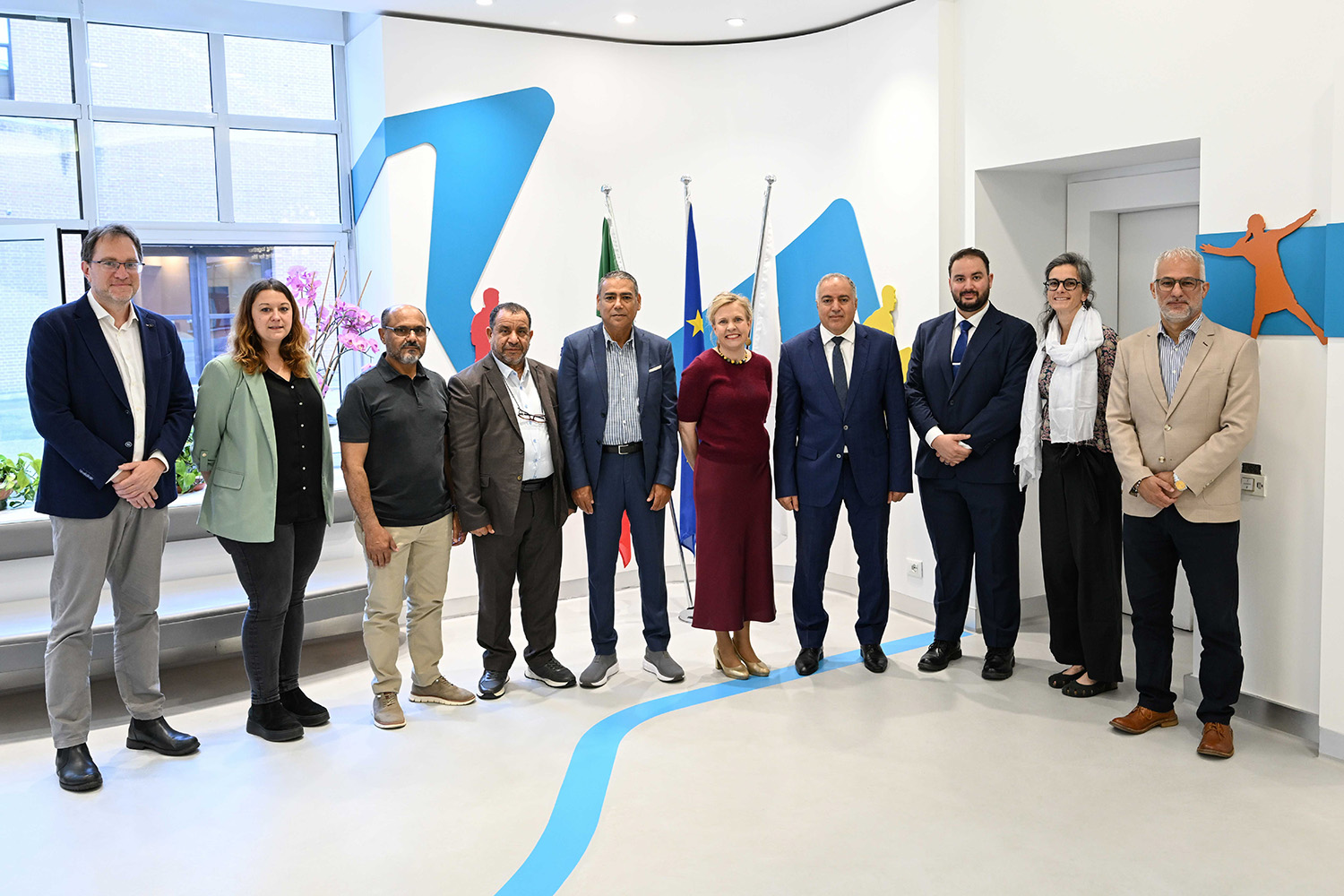
In addition, EU4Skills organized a week-long study tour to Italy, which concluded on 22 May 2026 and brought together a high-level Libyan delegation representing national institutions, universities and technical colleges, and the private sector. The study tour provided an opportunity to explore Italian approaches to higher education and employability governance, graduate tracking systems, career guidance, and cooperation between universities and the private sector.
Through institutional visits in Rome and Turin, including exchanges with the Italian Ministry of University and Research, the National Research Council, the National Agency for the Evaluation of Universities and Research Institutes (ANVUR), the National Institute for Public Policy Analysis (INAPP), the AlmaLaurea consortium, and the Italian Libyan Chamber of Commerce, participants gained insights into performance evaluation, graduate tracking, vocational education, academic-industry partnerships, entrepreneurship, and digital transformation. The exchange contributes to ongoing efforts to operationalize Libya’s national framework for enhancing graduate employability and to develop practical mechanisms for better aligning education outcomes with labor market needs.
Together, these initiatives reflect EU4Skills’ integrated approach to capacity building. While the Power BI training enhances the analytical and operational capacities of public administrators responsible for managing Libya’s TVET sector, the Italy study tour promotes institutional learning and knowledge exchange on graduate employability and education governance. By investing in data-driven governance, institutional learning, and international knowledge exchange, the project is helping strengthen resilient education institutions capable of responding effectively to national priorities and the changing demands of the labour market.
These activities form part of the EU4Skills project, funded by the European Union, co-funded by the French Government, and implemented by Expertise France in partnership with Libyan institutions.