







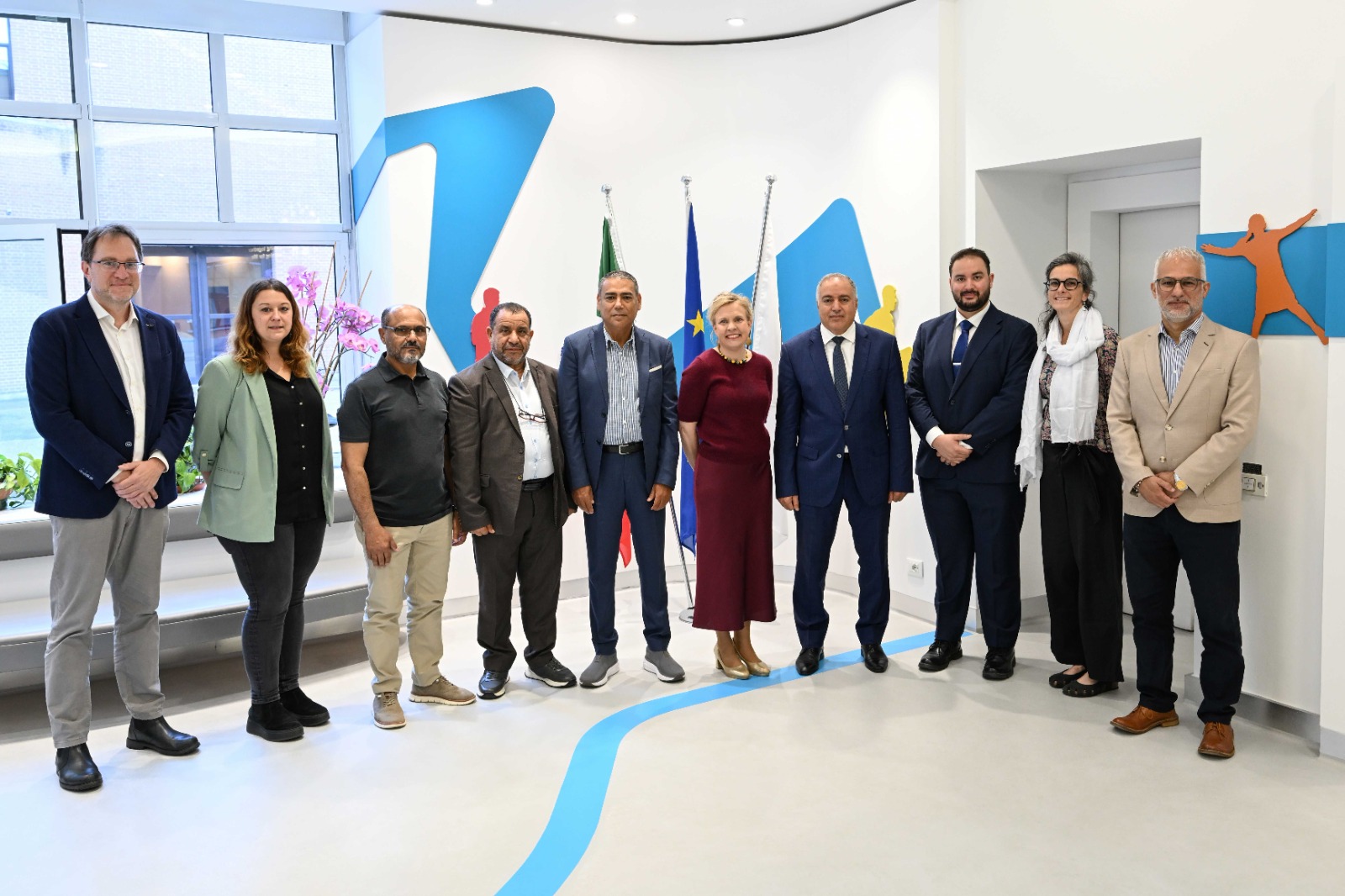
Libyan Delegation from the Ministry of Higher Education and Scientific Research Visits the European Training Foundation to Strengthen Skills Development and Link Education to the Labour Market
As part of a study visit to Italy organized by Expertise France to support the implementation of Libya’s National Framework for Graduate Employability, a Libyan delegation comprising representatives from the Ministry of Higher Education and Scientific Research, led by H.E. Dr. Saleh Al-Ghoul, Undersecretary of the Ministry of Higher Education and Scientific Research, visited the European Training Foundation (ETF). The visit aimed to provide participants with a deeper understanding of the Foundation’s work, particularly in the areas of governance, future skills, and qualifications frameworks and systems.
The visit began with a welcoming session delivered by ETF Director General Belvy Tursti, during which the importance of strengthening cooperation with Libya in the fields of skills development and linking education to labour market needs was highlighted.
This was followed by a series of specialized technical sessions covering a range of topics, including employability and skills systems development, qualifications frameworks, future skills, as well as networks and digital transformation in education and training. Participants also attended a presentation by the International Training Centre of the International Labour Organization (ITCILO), which showcased its experiences in these areas and its previous work in Libya.
The visit concluded with discussions on opportunities for future cooperation between the participating institutions, providing a platform for exchanging perspectives and strengthening partnerships in areas of mutual interest.
This study visit forms part of the EU4Skills project, funded by the European Union with a financial contribution from the French Government. The project aims to support the development of Libya’s education and training system, strengthen its alignment with labour market needs, and improve employment opportunities for Libyan youth.